Spin Automatica is a specialized automation concept often discussed by operators, technicians, and procurement teams. This guide explains what Spin Automatica typically involves, how suppliers differentiate offerings, and what buyers should check before commissioning or purchasing. It also provides objective sourcing conditions, a comparison table, and practical requirements to support safer decision-making in real production environments.
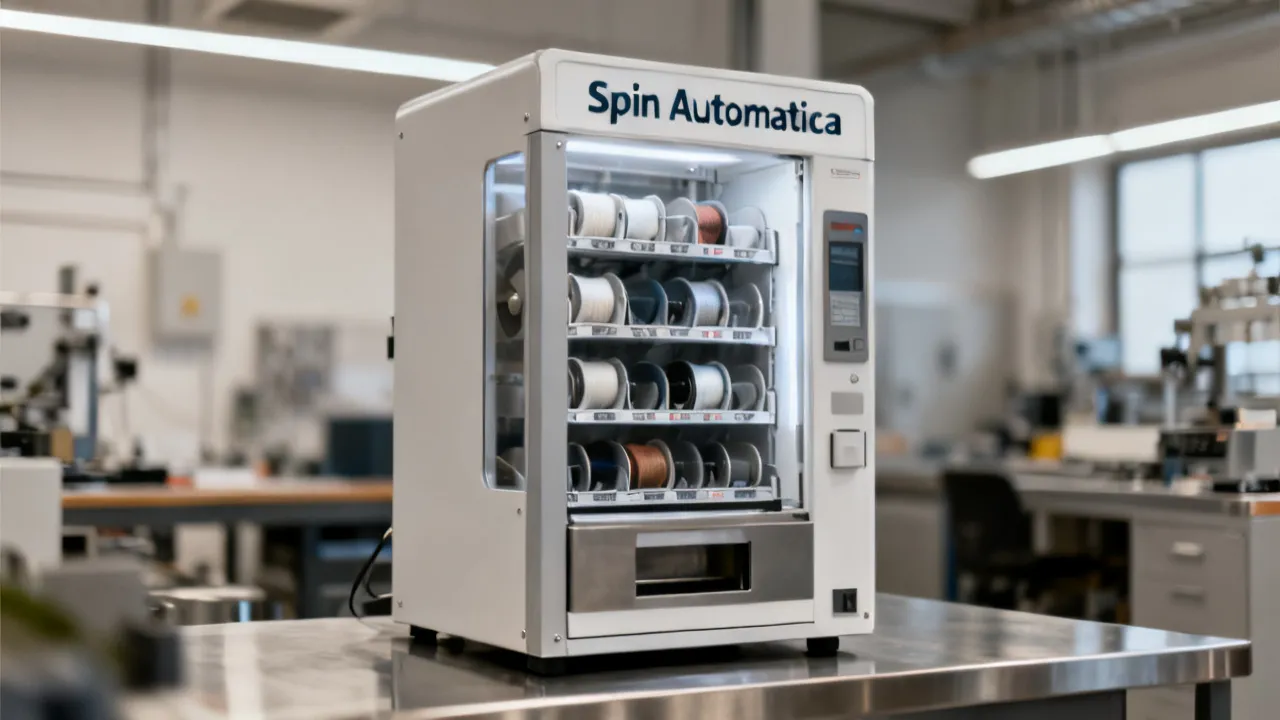
When evaluating Spin Automatica, the very important step is not choosing a vendor name—it is verifying how the system is engineered, documented, and supported for your specific workflow. In practice, buyers should prioritize safety documentation, repeatable setup procedures, maintenance accessibility, and transparent supplier responsibility. These factors usually determine good uptime more than marketing claims. Below, you’ll find an expert, procurement-focused view of how Spin Automatica solutions are typically assessed, what “price” discussions should include, and what supplier due diligence should cover.
This guide expands the evaluation lens from “Can it spin?” to “Can it spin reliably, safely, and repeatably over time—under our constraints, with our operators, and within our compliance expectations?” If you only assess performance in a demonstration environment, you risk discovering late in commissioning that the system behaves differently when production load, product variability, environmental conditions, and maintenance realities are introduced. The key decisions you make first will reduce those late surprises.
Spin Automatica is commonly used as a shorthand for an automated spinning workflow or an automation package centered on rotational motion. Depending on the application, this can involve controlled spinning cycles, motorized actuation, sensors for position or speed verification, and programmable logic that standardizes repeatability. In industrial and manufacturing-adjacent contexts, the value proposition often centers on reducing variability, improving consistency, and supporting scalable throughput.
Because the phrase can be used broadly, objective evaluation starts with a clear definition: what precisely rotates (fixture, spindle, drum, carousel), what materials or products are processed, how long each cycle runs, and how quality outcomes are verified. Without that, “automation” remains an umbrella term rather than a measurable capability.
To ensure clarity, procurement teams should insist on a “scope definition” that includes the mechanical, electrical, and software aspects of the spinning workflow. That scope definition typically should answer the following questions in plain language and with measurable parameters:
A robust vendor will not treat these details as optional. Instead, it will provide them as part of the technical proposal and will show where each specification influences performance and safety.
Procurement discussions around Spin Automatica can become misleading if they focus only on an upfront figure. From an industry-expert standpoint, the “true cost” typically includes:
If a supplier quotes a low number but does not specify installation and acceptance responsibilities, buyers often experience delays when systems need rework to meet site safety and integration standards.
To make “price” meaningfully comparable across vendors, procurement teams should normalize proposals using a structured approach. That means the same assumptions must be present in each bid: who provides power, who provides I/O wiring, what site work is included, how safety verification is performed, and what training is included. Without normalization, procurement can unintentionally select a supplier that appears cheaper but has hidden costs in site integration, engineering changes, or delayed commissioning.
In practice, buyers often find that the largest cost drivers are not the motor or cabinet hardware; they are engineering hours and integration tasks. Rotational systems require careful tuning and verification: control loops, sensor calibration, mechanical alignment, safety behavior under abnormal conditions, and fault recovery handling. If these are under-scoped, the system can fail acceptance testing even if it technically “runs.”
Therefore, when discussing price, demand clarity on the following cost-impacting topics:
Two suppliers may both offer “Spin Automatica,” yet their operational outcomes can differ widely. Industry buyers generally assess suppliers using practical evidence:
In many cases, the very credible suppliers can quickly explain “how” the machine achieves stability—through control tuning methods, sensor calibration routines, or repeatable fixture geometry—rather than relying on general statements.
Supplier due diligence should go beyond “can they build it” and extend to “can they keep it working.” That includes asking for concrete artifacts, not only verbal assurances. Examples of due-diligence evidence include:
A particularly important procurement question is whether the supplier has experience with the kind of product variability you expect. Spinning systems can be sensitive to load changes (product mass, imbalance, friction changes, or wet vs. dry conditions). If your application has variability, ask the supplier how they tune for it—do they use adaptive control, margin-based parameterization, or robust tolerance strategies?
Because Spin Automatica systems often involve rotational motion, evaluation must include mechanical and control stability. Expert teams typically verify:
Even when a system is “plug-and-run,” these checks reduce the risk of commissioning surprises. They also improve acceptance test outcomes because the system is evaluated against documented constraints, not expectations.
Procurement and engineering teams should treat operational requirements as “interfaces” between the automation system and the factory environment. This includes physical interfaces (mounting, guarding clearance), electrical interfaces (power quality, grounding, signal types), and operational interfaces (how operators start/stop, what “ready” means, how production scheduling affects cycling).
Operational readiness checks should include the following categories of risk:
A strong evaluation process includes verifying that the vendor has documented these risks and that mitigations are built into the design—not just mentioned verbally.
Automation is rarely adopted in isolation. For a Spin Automatica workflow to succeed, it must integrate with upstream and downstream steps. From a production engineering perspective, integration should cover:
Where possible, request a sample interface overview and an alarm list before final procurement. A well-designed system typically provides understandable diagnostics rather than vague fault codes.
From a procurement standpoint, integration also includes “who owns what” during troubleshooting. When a line stops, you need to know whether the root cause is the spin system, the conveyor logic, the product feeder, or the upstream sensor. That depends on how alarms and state transitions are designed. The best proposals include:
Another integration aspect that buyers sometimes overlook is the relationship between the spin process and quality metrics. If quality verification is performed downstream, the system should at minimum record enough process data to correlate with defects. That might include speed ramp parameters, dwell duration, and any sensor deviations. If you don’t capture cycle-level data, you may be unable to perform root cause analysis when quality drifts.
Procurement should ask for the data model the system provides—does it log to a local historian, export CSV, integrate with MES/SCADA, or provide APIs? Even if full integration is out of scope, you should insist on a practical logging strategy that supports your quality system.
In professional procurement, support is evaluated as rigorously as hardware. Buyers often request:
When documentation is incomplete, maintenance becomes reactive. That tends to reduce uptime and can increase good costs due to downtime and emergency sourcing.
Documentation quality matters not only for initial commissioning but also for long-term maintainability. A maintenance technician should be able to locate component wiring, identify sensor types, understand expected sensor ranges, and perform safe calibration or replacement without guessing. This requires documentation that is consistent across:
In many projects, the difference between a “good” and “great” supplier is how they handle documentation revisions. A supplier may provide initial manuals but fail to update them after field changes. Buyers should ensure that:
If you are comparing quotes for Spin Automatica, a credible proposal usually separates costs into clear categories. Typical quote components include:
If you only receive a single lump sum without a breakdown, it is harder to verify whether the supplier can meet your compliance, integration, and operational standards.
To improve quote comparability, procurement teams often require a “scope of supply” document and a “scope of responsibility” document. These documents clarify:
A credible quote should also include assumptions. For example: “Assumes stable incoming power quality within defined limits.” “Assumes operator loading within defined positioning tolerance.” “Assumes product size/mass range.” If these assumptions are not documented, the supplier may later interpret deviations as change requests, causing cost and schedule impacts.
Additionally, buyers should ensure that commissioning milestones and payment terms align with acceptance testing and documentation delivery. If payment is split too early (before acceptance), you may have limited leverage to ensure final documentation and performance criteria are met.
Because your query includes no specific city or country details for localization, any location-based wording is treated as “nearby”. In real procurement, “nearby” supplier proximity can matter for commissioning scheduling and onsite support—especially when the production line cannot pause for extended periods. Teams often plan spares stock based on local lead times and define escalation routes if a critical component fails during peak demand.
Even without naming a specific location, procurement decisions are affected by the practical reality of service response. Consider that rotational automation may fail under different conditions: sensor drift, encoder issues, drive faults, mechanical wear, or lubrication-related effects (depending on design). The ability to restore quickly can depend on:
Therefore, “nearby” is not only about geography—it is about logistics reliability and service capability. Buyers should request a service plan that includes expected response times by severity level and provides a practical escalation pathway, including remote diagnostics, part shipping, and onsite support.
Reliable automation systems depend on documented safety design and verifiable control behavior. For guidance, many organizations align with recognized standards and research in industrial safety and machinery risk management. For example, the ISO 12100 series and related safety engineering practices emphasize risk assessment, risk reduction measures, and validation. For functional safety concepts, teams often reference IEC 61508 (and machinery-specific derivatives) when they need a structured approach to safety-related control systems.
Procurement decisions also benefit from established quality and documentation expectations. In many industries, configuration management, traceability, and maintenance documentation are treated as essential for good lifecycle performance—not just installation.
Sources (reliable, standards-based):
Note: Links are not included in comparison tables below, but the standards are publicly referenced through their issuing organizations.
From a procurement perspective, standards-based engineering is valuable because it creates a repeatable method for documenting decisions. You are not relying solely on one person’s expertise; you are enforcing a structured process. That structure matters when projects scale across multiple lines or multiple years, because the “institutional memory” becomes embedded in documentation rather than residing only in individuals.
The table below presents a structured comparison framework. It is designed to help you assess different approaches objectively—without relying on marketing language.
| Evaluation area | What to look for in strong proposals | What to question if unclear |
|---|---|---|
| System definition | Clear description of what spins, cycle behavior, limits, and measurable outputs | Vague wording with no duty cycle, no cycle timeline, or no measurable acceptance criteria |
| Safety engineering | Documented risk assessment approach, guarding, interlocks, safe states, validation evidence | Only “safety compliant” statements without describing methods, tests, or safety functions |
| Controls and sensing | Named sensor types, calibration approach, feedback loops, alarm logic, and fault recovery | Only “PLC-controlled” without details on sensors, parameter tuning, or verification method |
| Integration scope | Defined I/O, interface expectations, commissioning responsibilities, and data handoff | Unclear integration boundaries leading to delays during site integration |
| Price transparency | Line-item breakdown (engineering, hardware, integration, commissioning, training, spares) | Lump sum without a breakdown, or missing scope for acceptance testing |
| Supplier responsibility | Defined service model, response expectations, escalation path, and onsite/remote capabilities | No service plan or unclear warranty terms and spare parts policies |
| Lifecycle support | Maintenance schedule, spare parts strategy, and documentation suitable for technicians | Documentation gaps or uncertain access to replacement components |
To use this table effectively, procurement teams should score each supplier using consistent criteria and require supporting evidence for each “strong proposal” claim. A claim without an attached artifact (or a clear description of what will be delivered) should be treated as an open risk.
Use the steps below as a practical checklist. The goal is to reduce risk by ensuring the system’s operational and safety requirements are validated before full production deployment.
Precise process requirements should include both “happy path” and “edge cases.” For example, what happens if a product is slightly misloaded? What if product mass is at the high end of tolerance? What if humidity changes or a wet coating affects friction? While suppliers cannot fully predict your production variability, you should communicate expected ranges so that control tuning and safety margins can be set appropriately.
Acceptance criteria should specify what is measured and how. For spinning systems, examples of measurable criteria could include:
Where possible, ensure criteria include environmental and product variability conditions. Vendors often meet acceptance criteria under nominal test conditions, so inclusion of realistic conditions reduces the risk of “acceptance by optimism.”
Safety validation is not only about compliance paperwork; it is about demonstrating that the machine responds correctly under realistic scenarios. Procurement should encourage the supplier to present:
In addition, buyers should consider whether safe speed/stop behavior is adequate for operator interactions. For rotational equipment, stopping time and mechanical energy considerations are key. If a design relies on passive stopping, ensure it meets site safety expectations and documented risk assessment outcomes.
Documentation review should include verifying that:
If documentation is delivered early for review, it should include revision identifiers. Procurement should specify a “final document package” requirement at acceptance completion, including as-built drawings and software backups.
Normalization is a critical procurement skill. A practical approach is to request each vendor to complete a standardized “scope matrix” with checkboxes and named responsibilities: supplier installs vs. buyer prepares; what is included vs. excluded. If vendors do not provide that level of detail, buyers should treat that as a risk marker.
Also ensure that differences in proposed components do not hide differences in capability. For example, a vendor may propose a “similar” sensor or drive but with different accuracy or temperature stability. If so, acceptance criteria should be re-evaluated to ensure both vendors are measured fairly against the same performance targets.
Commissioning planning should include operational readiness beyond training. For example:
Operators and maintenance staff often influence early performance more than expected. If the HMI/controls are unclear or if restart logic confuses staff, the system may be used incorrectly and fail acceptance during the early ramp. This is why training deliverables should be tied to documented processes and roles.
Pilot runs are not only technical—they are organizational. Procurement teams should require:
Controlled change management is particularly important in rotational systems where parameter changes may fix one issue while worsening another (e.g., improved speed stability but increased vibration or extended stop time). A structured pilot avoids “trial and error” without documentation, which later complicates troubleshooting.
Lifestyle and maintenance are often where automation projects gain or lose value. Procurement should ensure:
A maintenance plan should include “what to inspect” and “what to do if inspection results deviate.” That can reduce downtime because maintenance staff can act quickly with clear thresholds rather than escalating every issue.
Below are typical requirements that buyers should enforce when procuring Spin Automatica. These conditions are written to support objective, verifiable decisions.
To strengthen this checklist, buyers may add a few more enforcement items that commonly surface later as disputes or delays:
In procurement, Spin Automatica typically describes an automated spinning or rotational-cycle solution. Because the term can vary by provider, you should request a clear technical definition: what spins, control parameters, cycle timing, safety functions, and measurable acceptance criteria.
In addition, procurement teams should clarify whether Spin Automatica includes only the spinning subsystem or also includes the surrounding materials handling (loading/unloading mechanisms, conveyors integration, product detection, and downstream interface). If a vendor says it is “automation,” ensure the scope is explicit.
Normalize scopes: ensure each quote includes the same commissioning responsibilities, acceptance testing requirements, documentation deliverables, training coverage, and service terms. A lower upfront number may be more expensive if commissioning or safety validation is excluded.
Also compare price using equivalent assumptions: duty cycle, expected product range, environmental conditions, and data logging/export needs. If one vendor assumes ideal conditions and another includes robustness features, the quotes will differ; that difference is not “bad” but it should be clearly stated so you can decide based on real risk reduction.
Ask for system architecture summary, safety function descriptions, sensor and control approach, alarm/fault recovery behavior, acceptance criteria, and a spare parts strategy with lead times. These details directly affect reliability and uptime.
If you want a short list that typically yields high value early in evaluation, request:
“Compliance” alone can be too broad. Seek evidence of a risk assessment approach and validation of safety functions (for example, safe states and interlock testing). This aligns with standard safety engineering practices used across machinery industries.
Procurement should request not only “what safety components are used,” but also “how they are validated in your context.” The question is not whether the supplier uses known safety devices, but whether those devices are correctly applied, tested, and validated for your machine geometry, product handling method, and operator workflow.
Often yes, but integration depends on I/O interfaces, triggering logic, data exchange expectations, and physical/mechanical constraints. The supplier should state the integration boundary clearly, including who provides electrical integration and how signals are mapped.
Integration should be evaluated at three levels: electrical signals, control logic and state transitions, and data/traceability. Many integration failures occur at level two—state transitions—because upstream equipment expects a “ready” signal in one format, while the spin system provides it differently.
Ask for the service model before purchase: remote support availability, escalation path, typical response expectations, and how spare parts are supplied. Also request a first-run fault management plan and training for maintenance technicians.
Additionally, ask how the supplier handles persistent faults. For example: if a recurring encoder fault occurs, do they send replacement components immediately? Do they perform on-site diagnosis? Do they analyze root cause data, adjust parameters, or check mechanical mounting? A clear service plan reduces “downtime uncertainty,” which is often as costly as the hardware itself.
They are critical. A system can meet acceptance during installation but still underperform if maintenance documentation is incomplete or spare parts lead times are long. A strong supplier provides a maintenance schedule and a practical spare parts list.
Procurement should also ask about recommended stocking strategy. For example, will you stock critical sensors and drives locally? How many spares should you keep based on expected annual failure rates and lead times? The supplier’s guidance can help you balance inventory cost against downtime risk.
Choosing Spin Automatica is fundamentally a risk-and-clarity exercise. The top outcomes usually come when buyers define the process precisely, require documented safety and acceptance criteria, and compare supplier proposals on normalized scope rather than headline price. By following the step-by-step evaluation approach and enforcing clear conditions and requirements, teams can improve reliability, protect safety objectives, and build a sustainable automation lifecycle—well beyond the initial installation phase.
Ultimately, the “first decisions” that matter most are the decisions that remove ambiguity early: what spins, what limits exist, what safety behaviors are required, what acceptance tests will prove performance, what documentation will be delivered, and how the supplier will support you when reality differs from the pilot. When those decisions are made with measurable clarity, Spin Automatica becomes an engineered capability rather than an expensive experiment.
Spin Automatica: Expert Guide to Safe Optimization

Spin Automatica: Industry Guide for Buyers and Operators

Spin Automatica: Expert Overview and Buyer Considerations
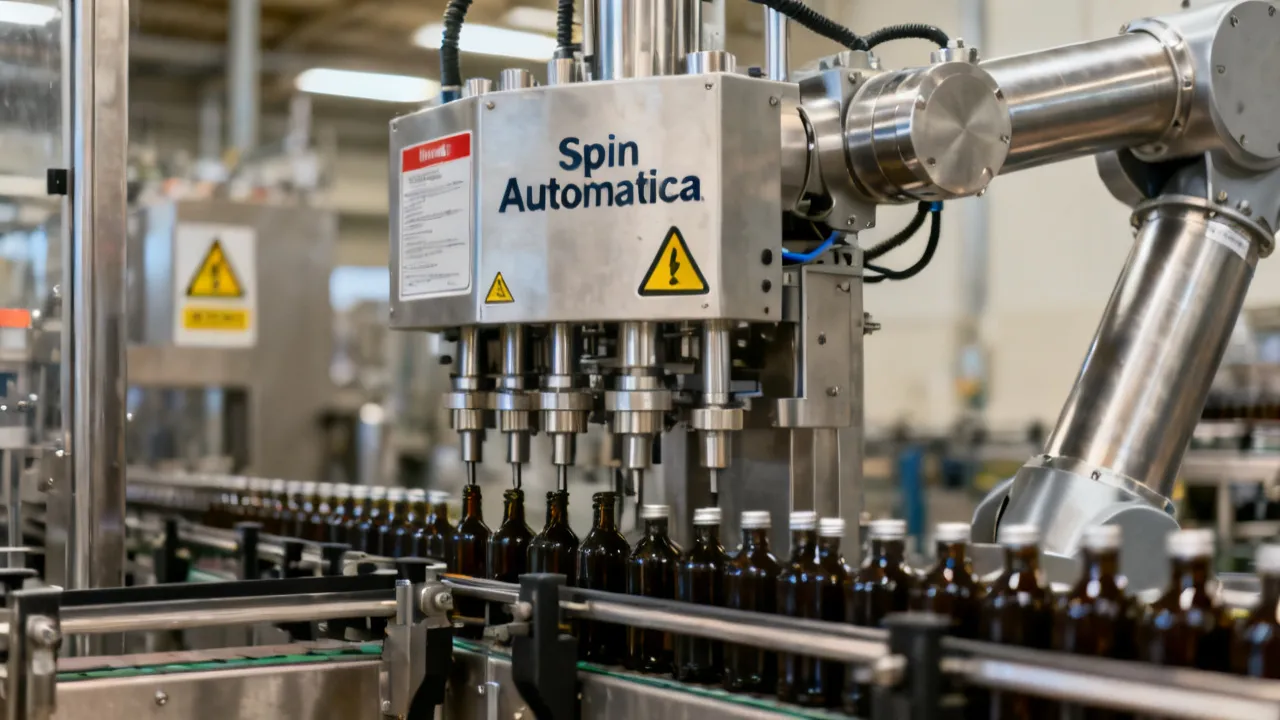
How Spin Automatica Optimizes Industrial Filling Processes
Spin Automatica Guide for Informed Decisions
Spin Automatica: An Expert Guide to Smart Automation

Understanding Spin Automatica for Smarter Slot Choices
Spin Automatica: Expert Guide to Use and Sourcing
Understanding Spin Automatica: Use, Care, and Pricing

Spin Automatica: Industry Guide for Buyers and Operators
This guide explains Spin Automatica and how to evaluate rotary/spin automation solutions for stable production. It provides objective background on what “Spin Automatica” typically refers to in industrial automation contexts, outlines key technical considerations such as throughput, safety controls, and integration points, and offers practical evaluation steps and requirements for procurement decisions.
Spin Automatica Guide for Informed Decisions
This guide explains how “Spin Automatica” is typically evaluated in real operational contexts, from supplier credibility to safety checks and cost planning. Objectively, Spin Automatica is often discussed as an automated spinning experience product, making due diligence crucial. The article covers selection criteria, deployment considerations, and risk controls, with a structured comparison table, a step-by-step checklist, and expert-style FAQs.
Spin Automatica: Expert Guide to Use and Sourcing
Spin Automatica is a specialized automation concept often discussed by operators, technicians, and procurement teams. This guide explains what Spin Automatica typically involves, how suppliers differentiate offerings, and what buyers should check before commissioning or purchasing. It also provides objective sourcing conditions, a comparison table, and practical requirements to support safer decision-making in real production environments.
Understanding Spin Automatica: Use, Care, and Pricing
Spin Automatica is a compact, automation-oriented system concept focused on precise rotational processing and repeatable handling. This guide explains how these systems are typically evaluated—covering operational purpose, integration choices, supplier considerations, and practical price factors—while keeping technical discussion objective and grounded in common industry practices.

Spin Automatica: Expert Guide for Automated Manufacturing
This guide explains Spin Automatica and how automated spinning processes are specified, integrated, and maintained in manufacturing environments. Objectively, it covers what “spin” automation typically refers to in production lines, the quality and safety considerations around repeatable motion, and the practical supplier-evaluation factors used by procurement teams and engineers.
